Ndox
Senegal Secondary School Competition Entry
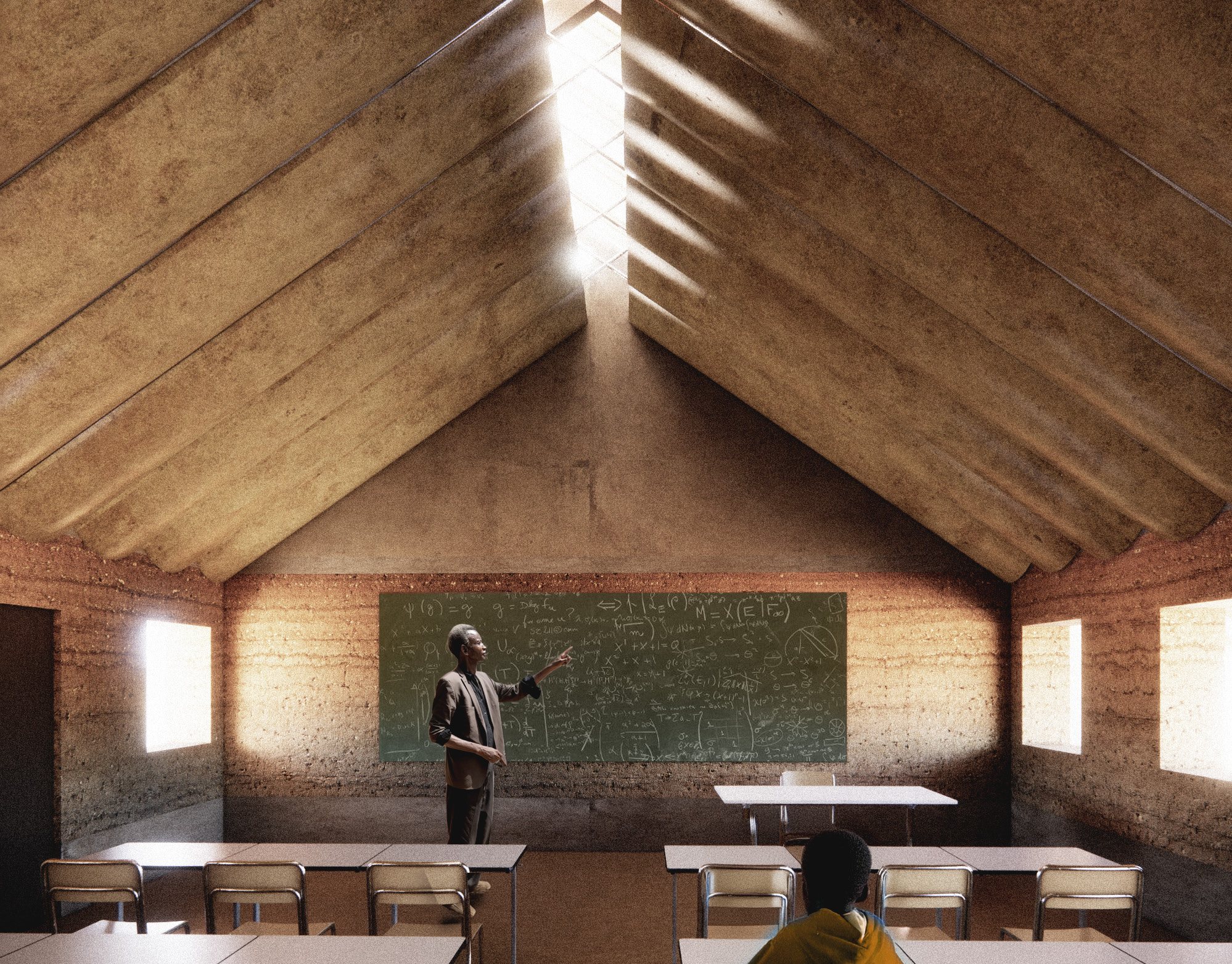
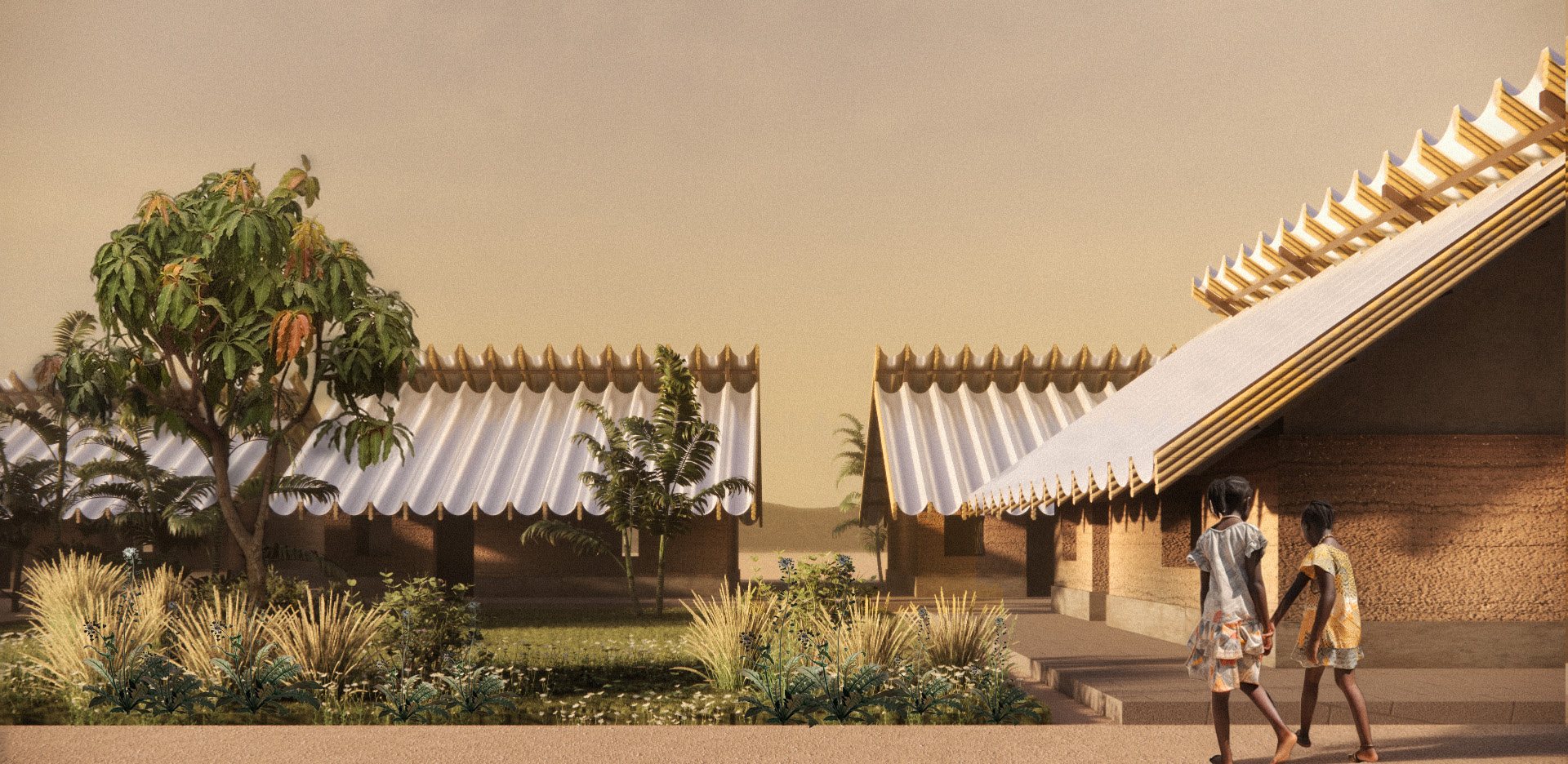
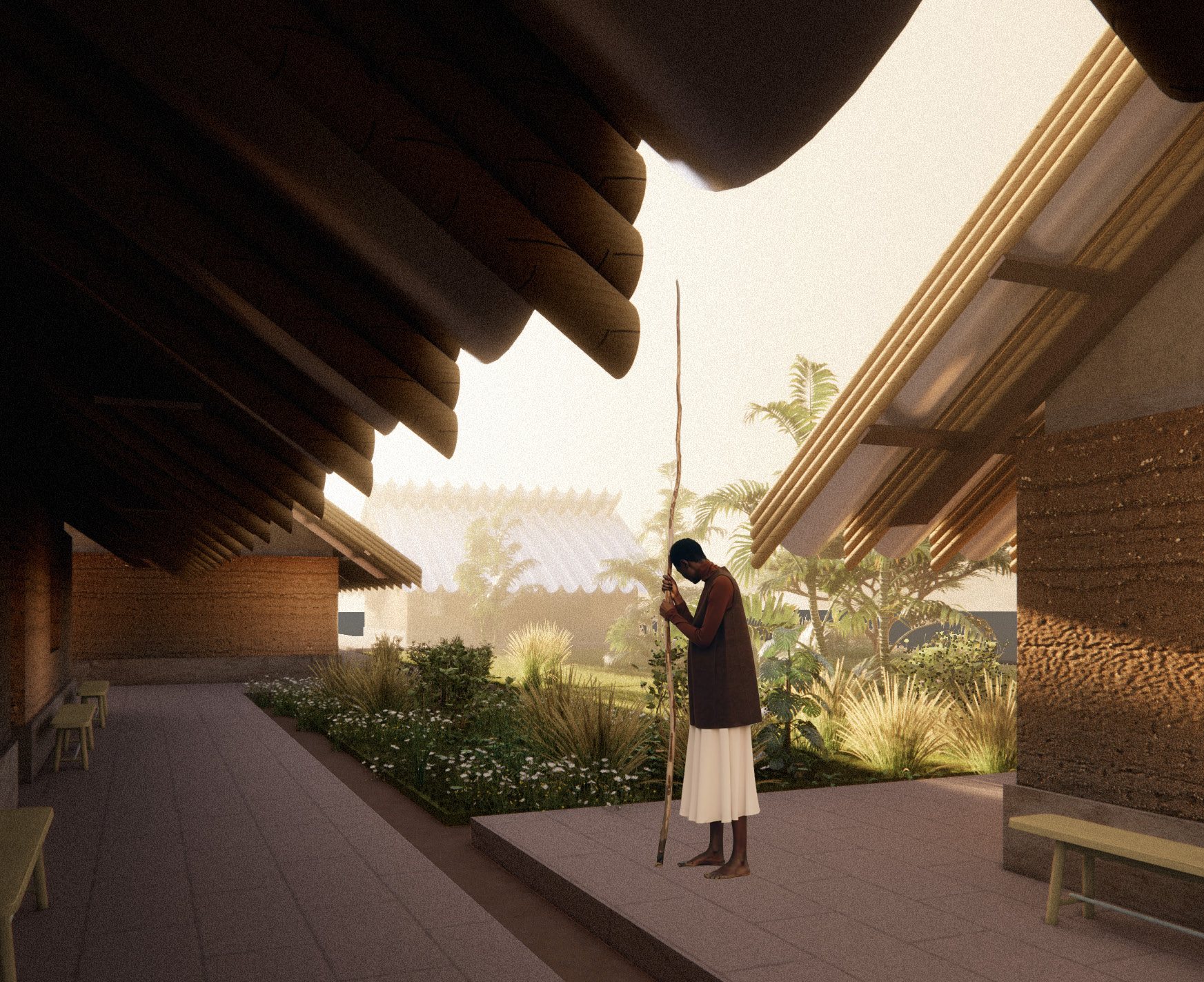
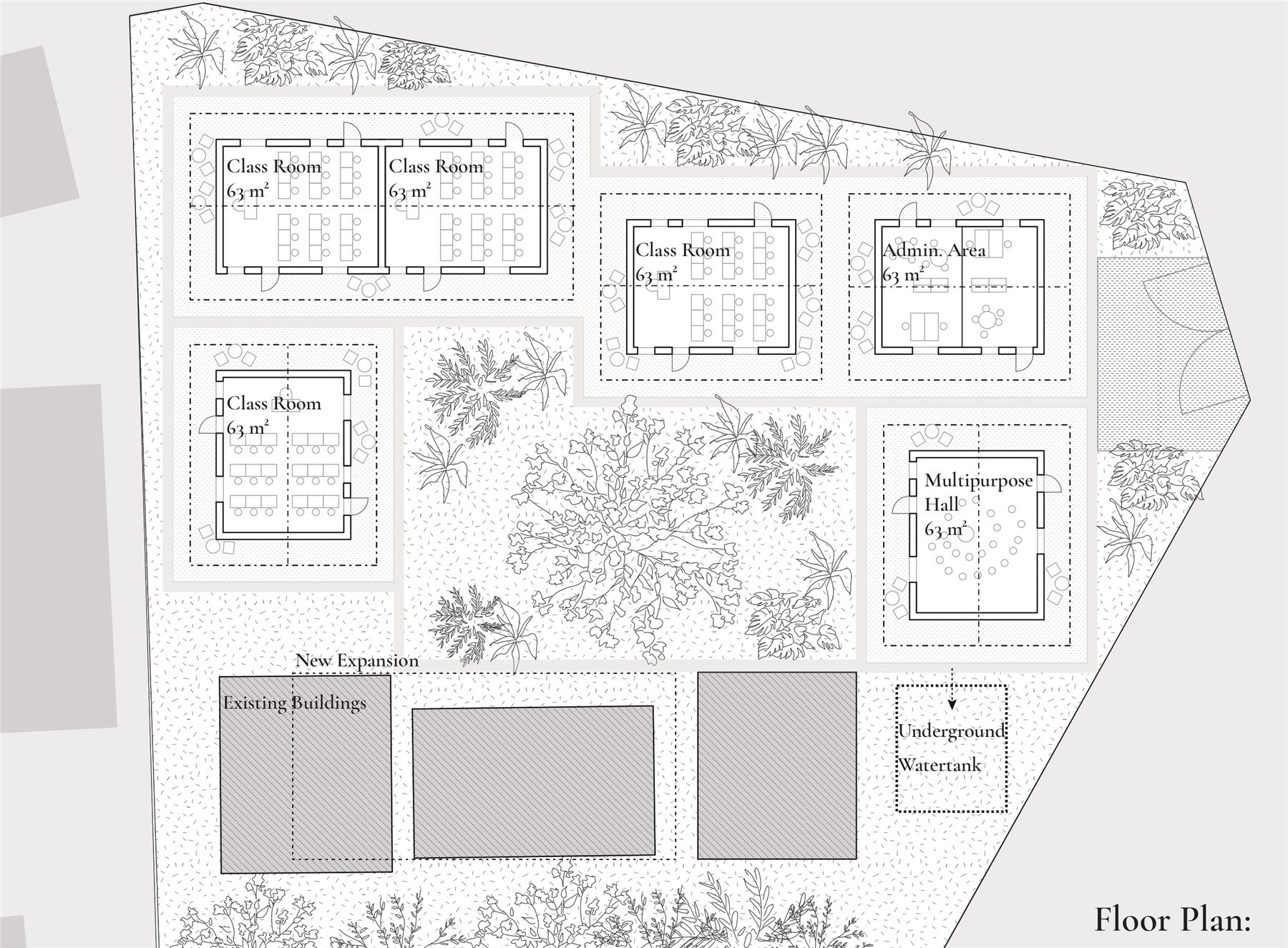
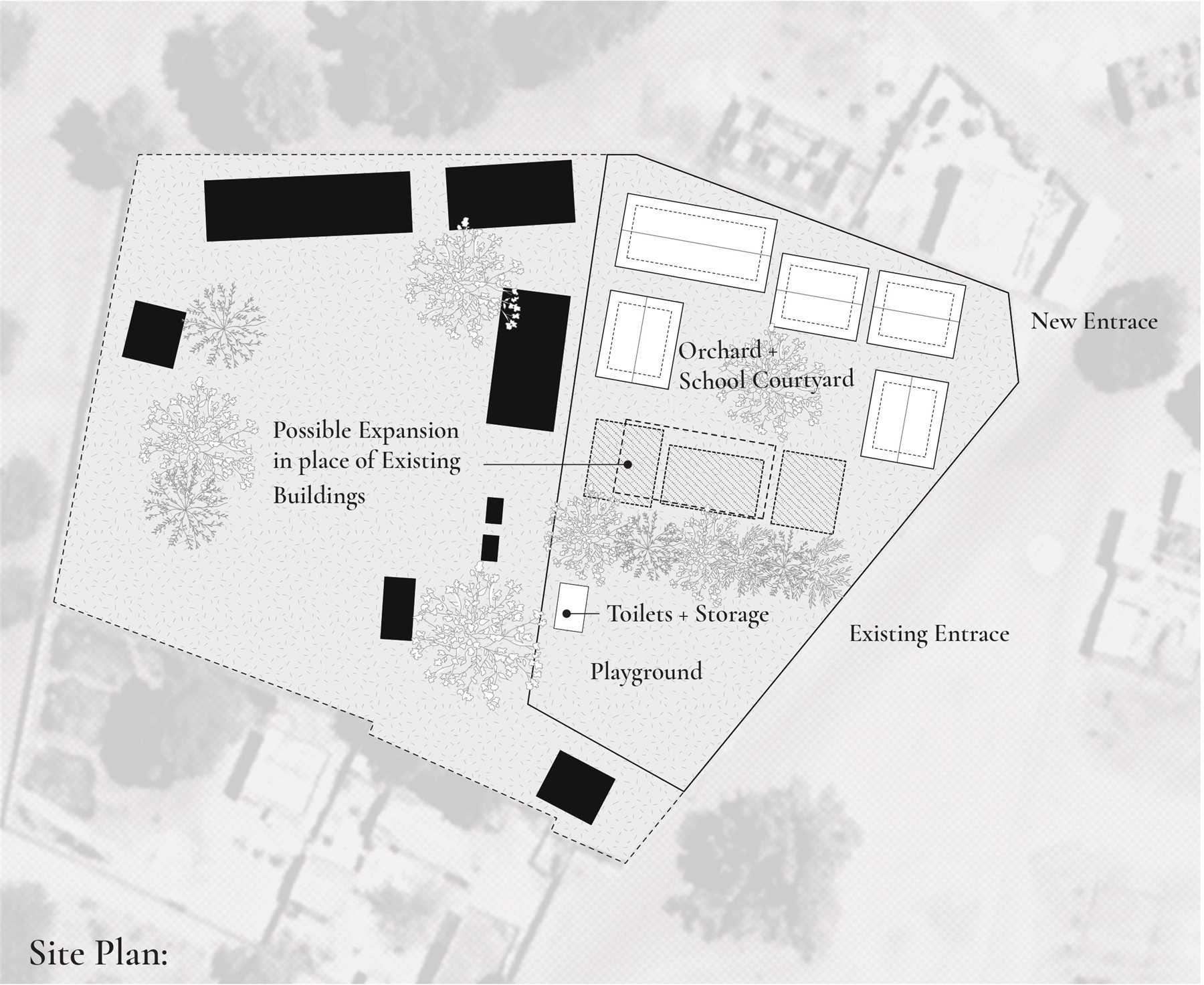
This project is conceived as a climate-responsive learning compound using earth as the primary building material. The design prioritizes thermal comfort, natural ventilation, durability, and replicability for similar contexts in rural Senegal.
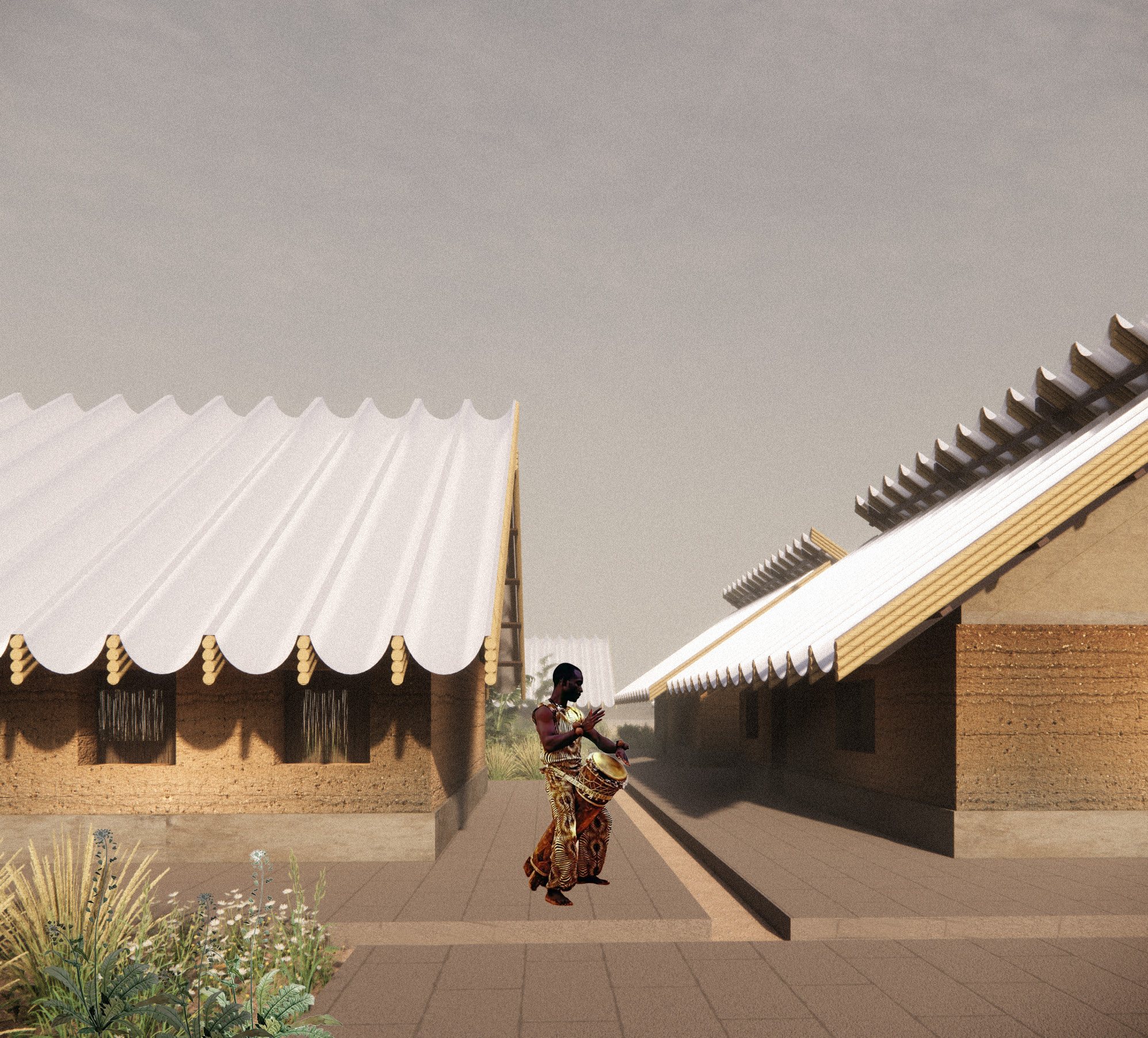
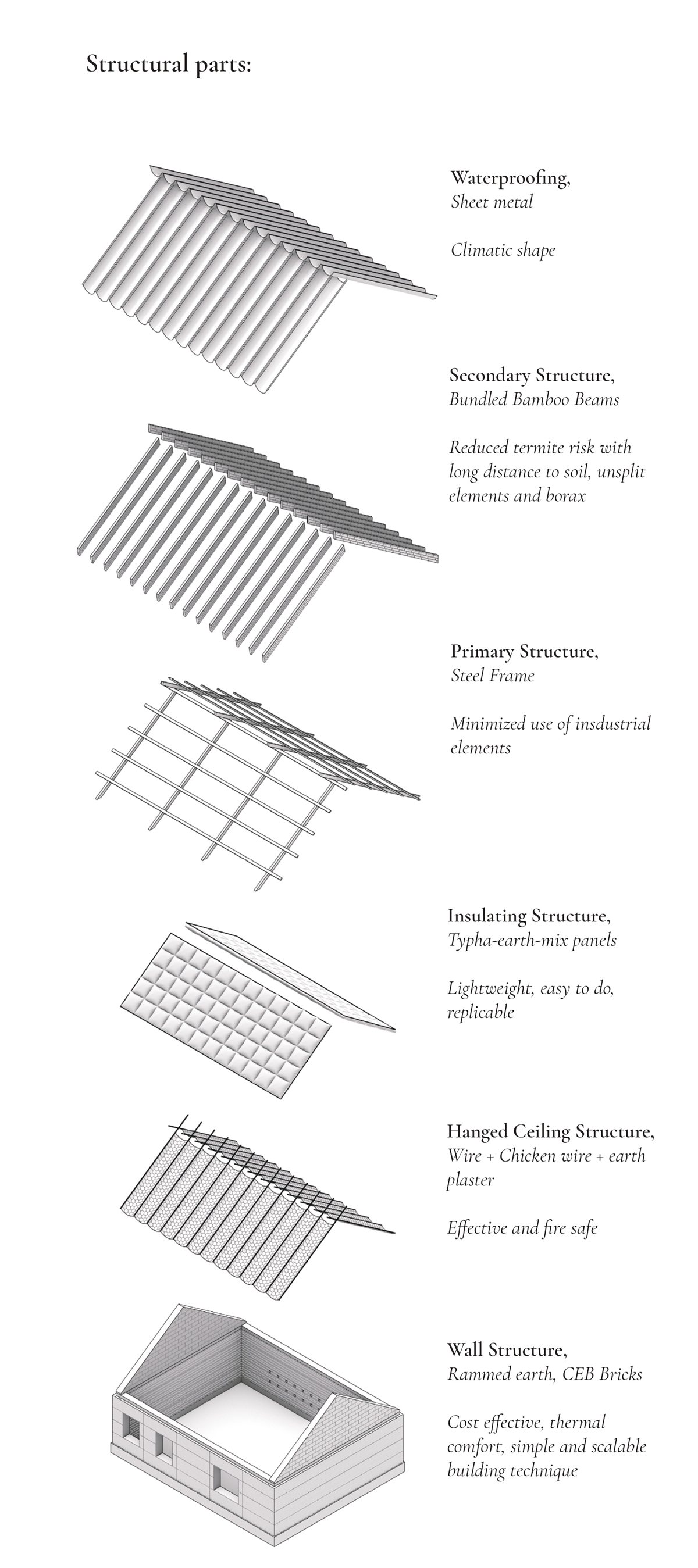
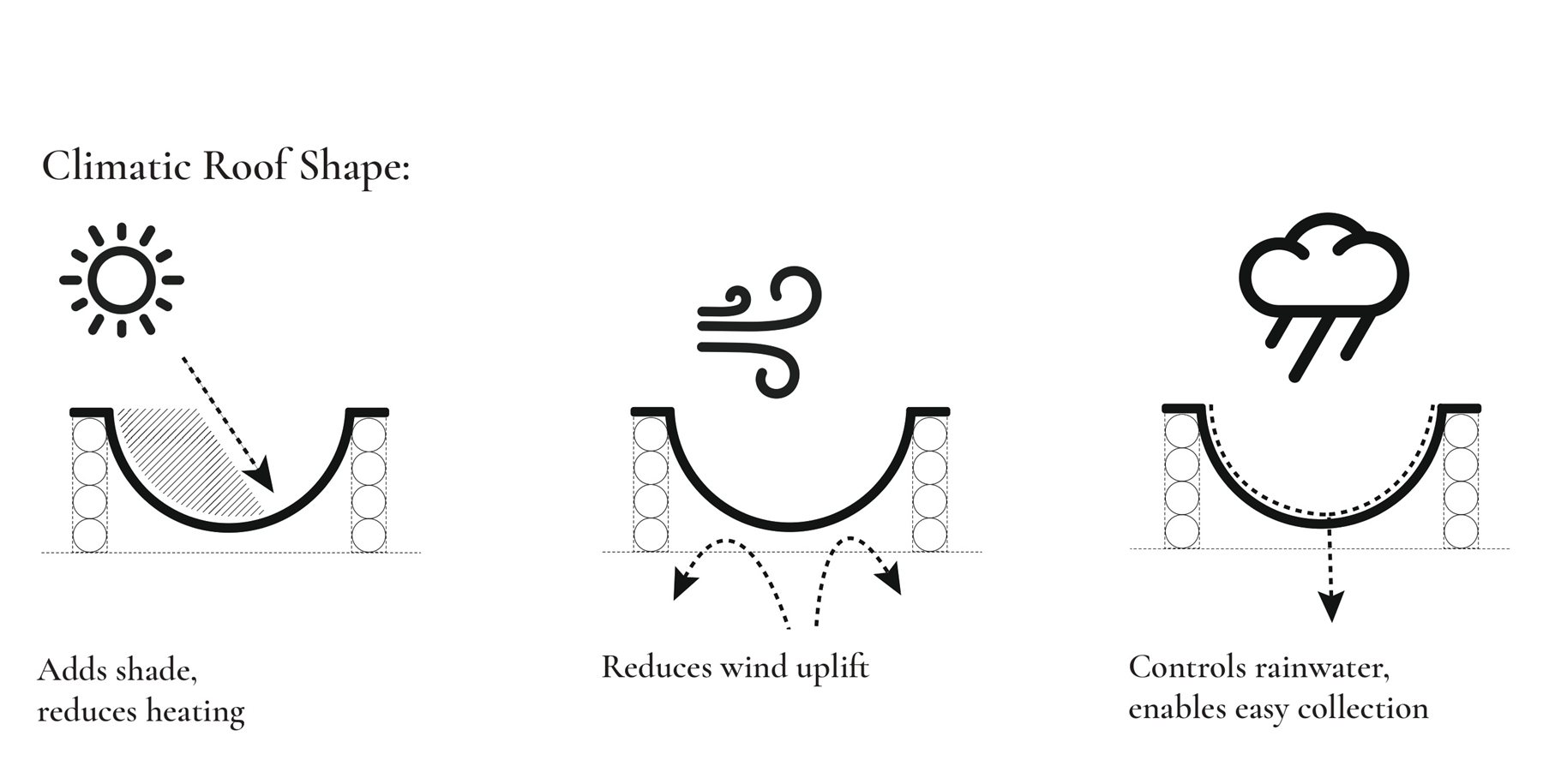
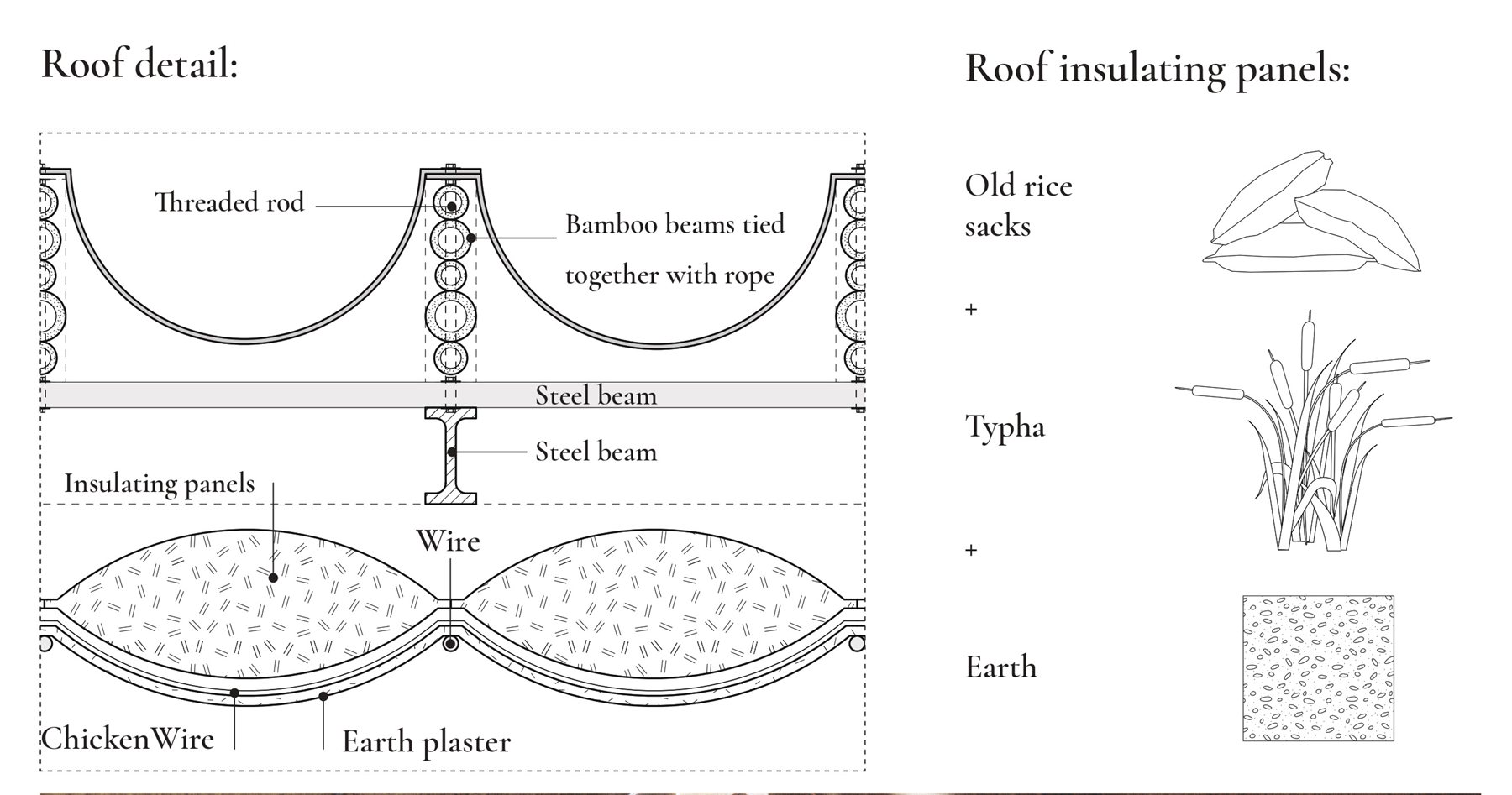
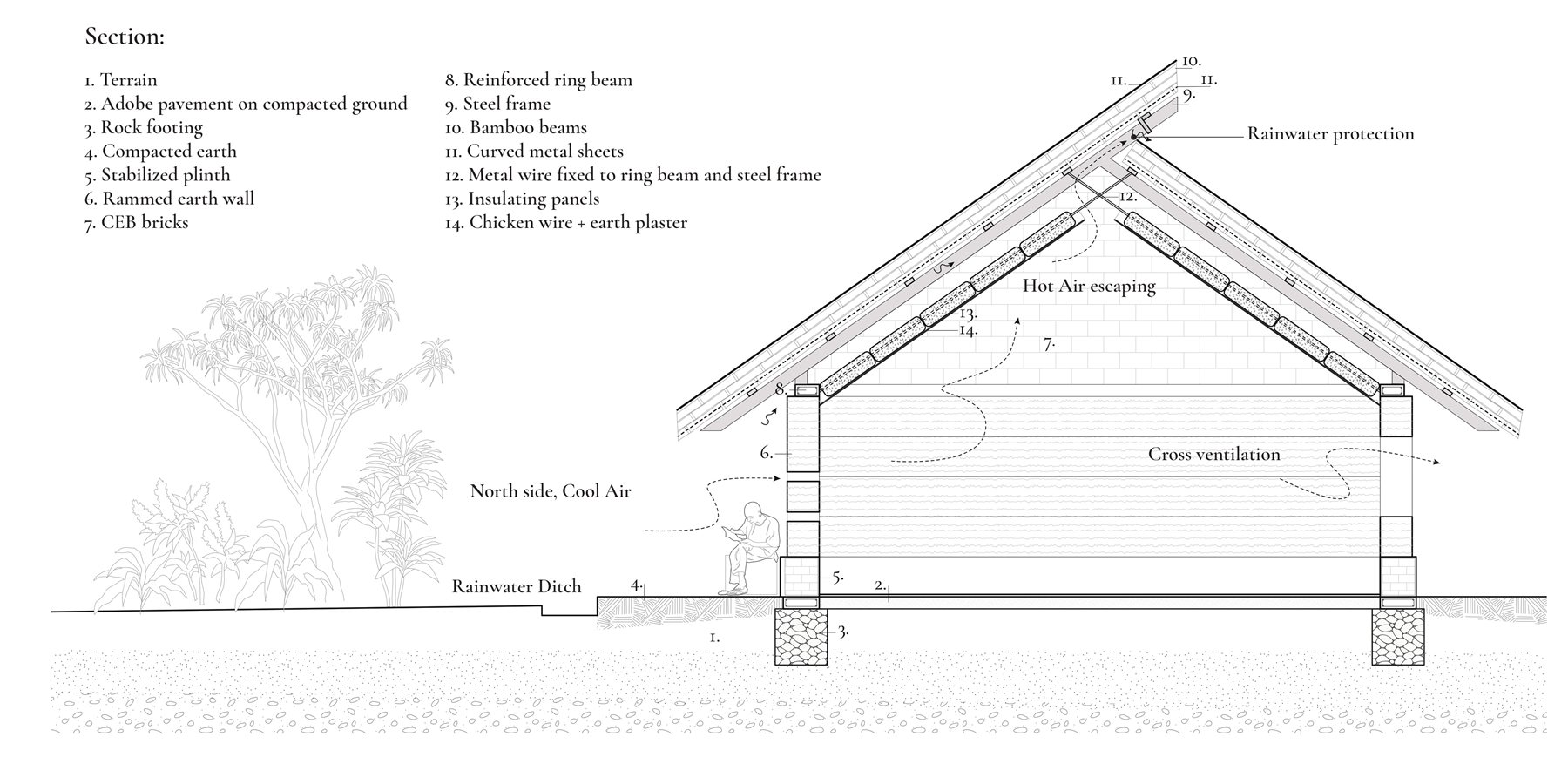
The roof geometry plays a central role in environmental performance. Metal sheets are used for waterproofing due to their availability, durability, and ease of installation, but instead of a flat surface they are curved between structural members. This curvature creates shaded zones on the metal surface, reducing direct solar exposure and lowering surface temperatures, which in turn limits heat transfer into the classrooms. The segmented roof profile also improves wind behavior: it reduces uplift forces at the eaves during storms, softens airflow across the roof, and supports continuous ventilation of the roof cavity. Warm air is allowed to escape at the highest point in the roof, reinforcing the stack effect. The sloped, curved geometry efficiently channels rainwater toward ground-level drainage and allows for the collection of runoff in an underground water tank for reuse.